Evolving Teachable’s Learning System: A Structured Approach
This project focused on enhancing Teachable's learning system by developing a mental model, the "kitchen sink map," to better understand and support various learning experiences. Through user research and interviews, we identified key needs, such as an all-in-one platform for content and communication, simple student navigation, and flexible content management for creators. These insights have and still are driving improvements to the platform, including better communication tools, seamless live session integration, and more intuitive course creation, to meet the evolving demands of creators and their teaching models.
Understanding the Learning Experience
A fellow product designer and I had been working on Teachable’s core product. As we worked on Teachable’s core products—one of us focusing on courses and the other on the coaching product—we realized that users of both shared similar foundational needs when creating their offerings. This insight led us to explore how learning experiences could be better structured to meet these shared capabilities.
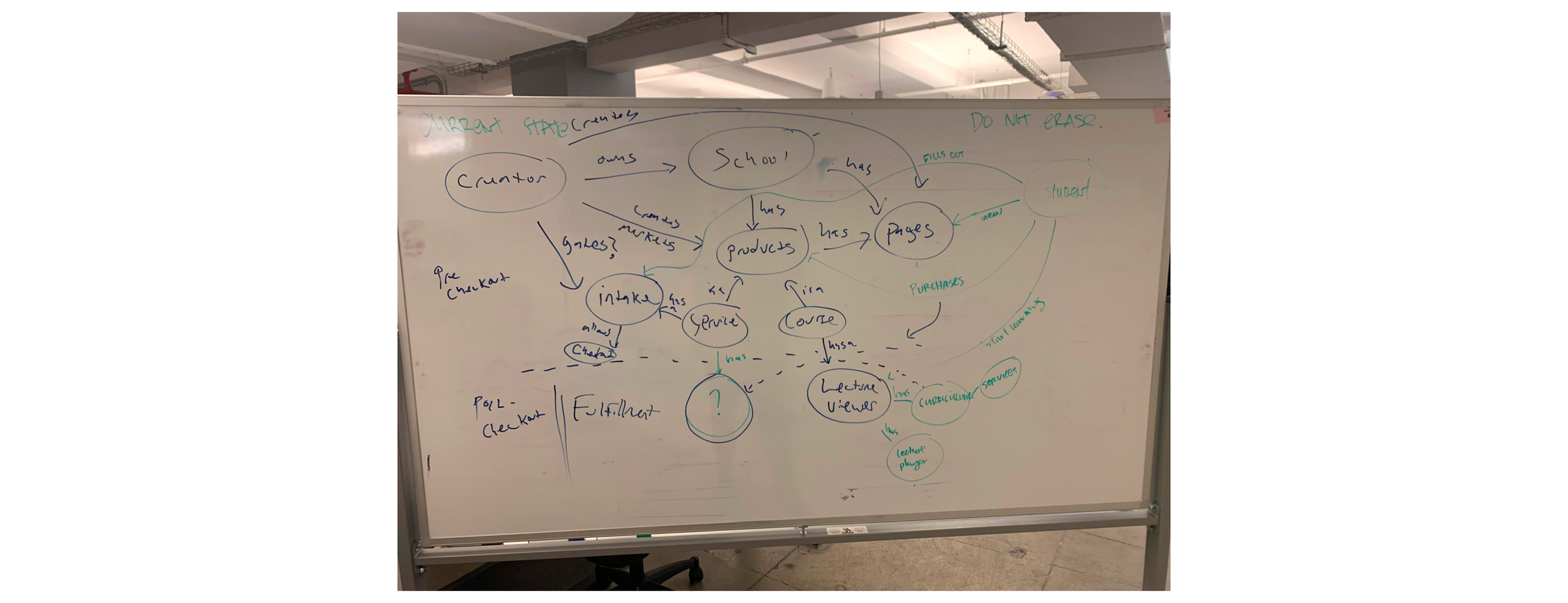
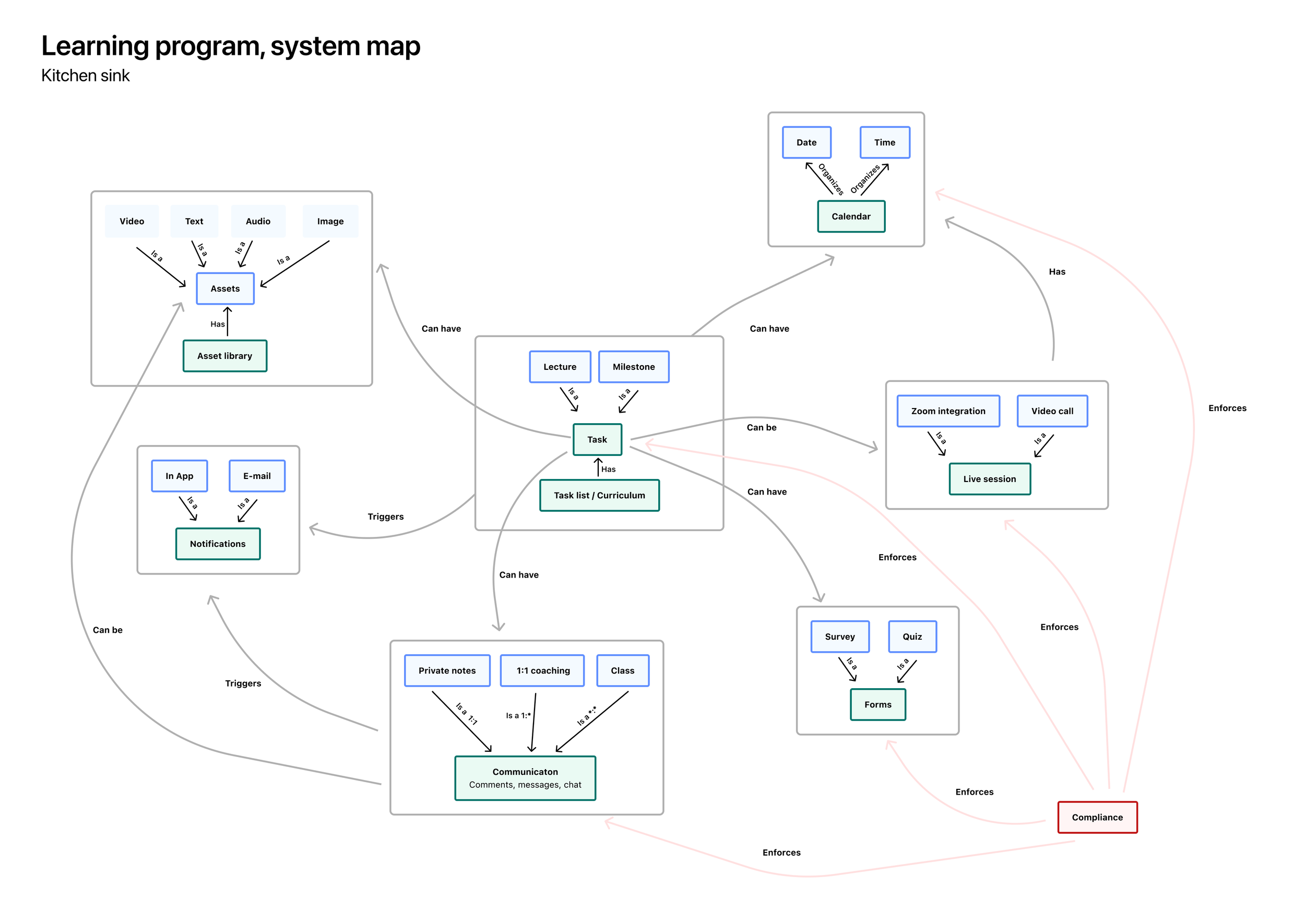
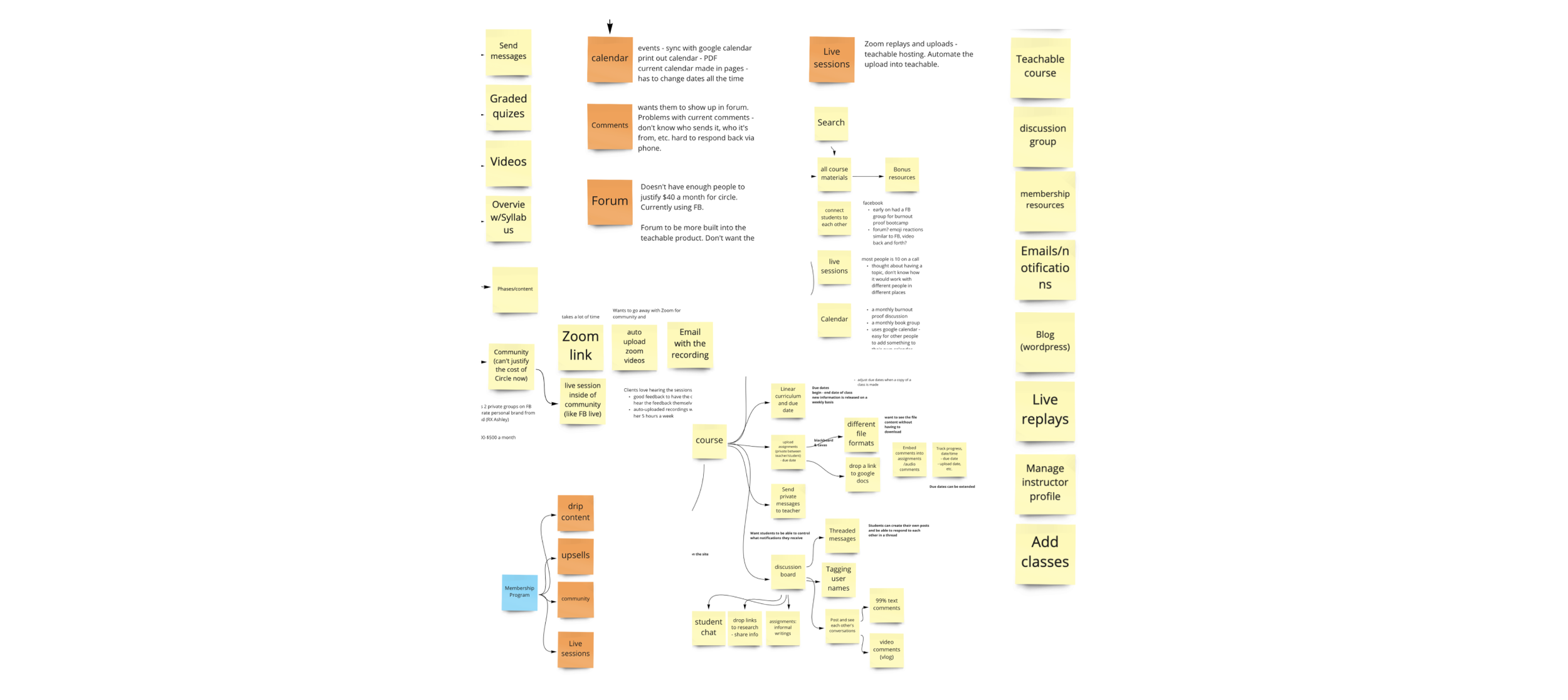
THE “KITCHEN SINK MODEL”
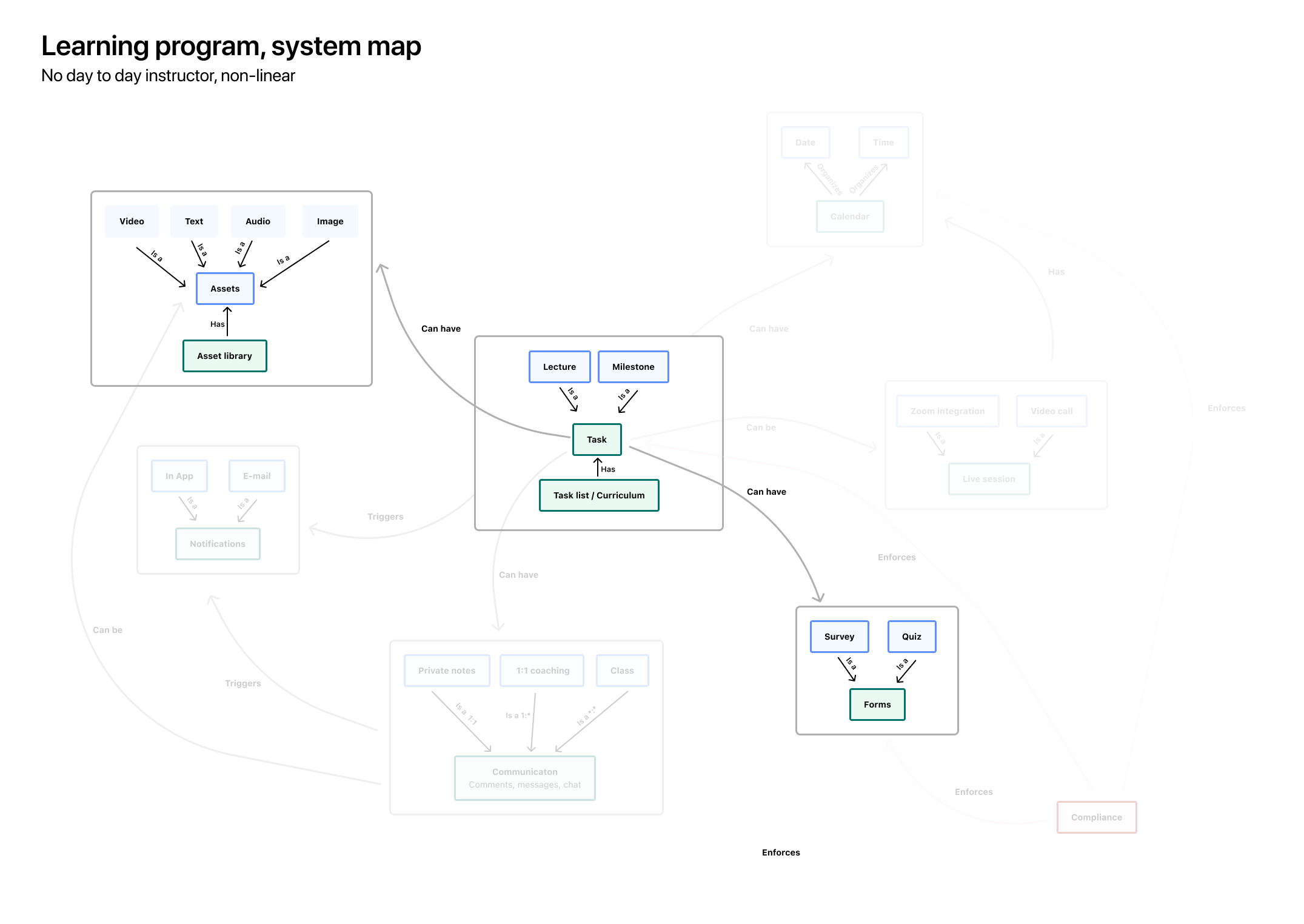
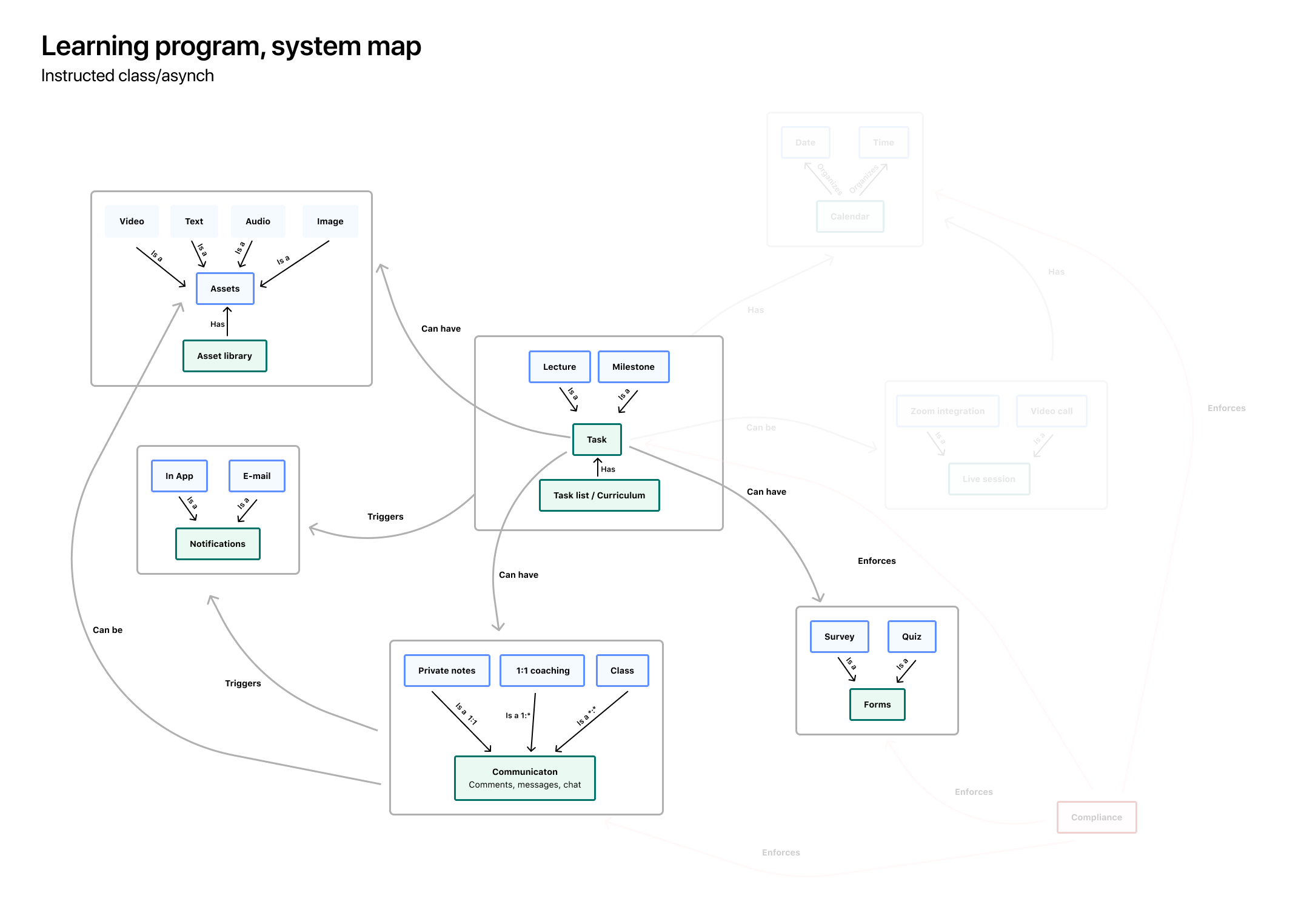
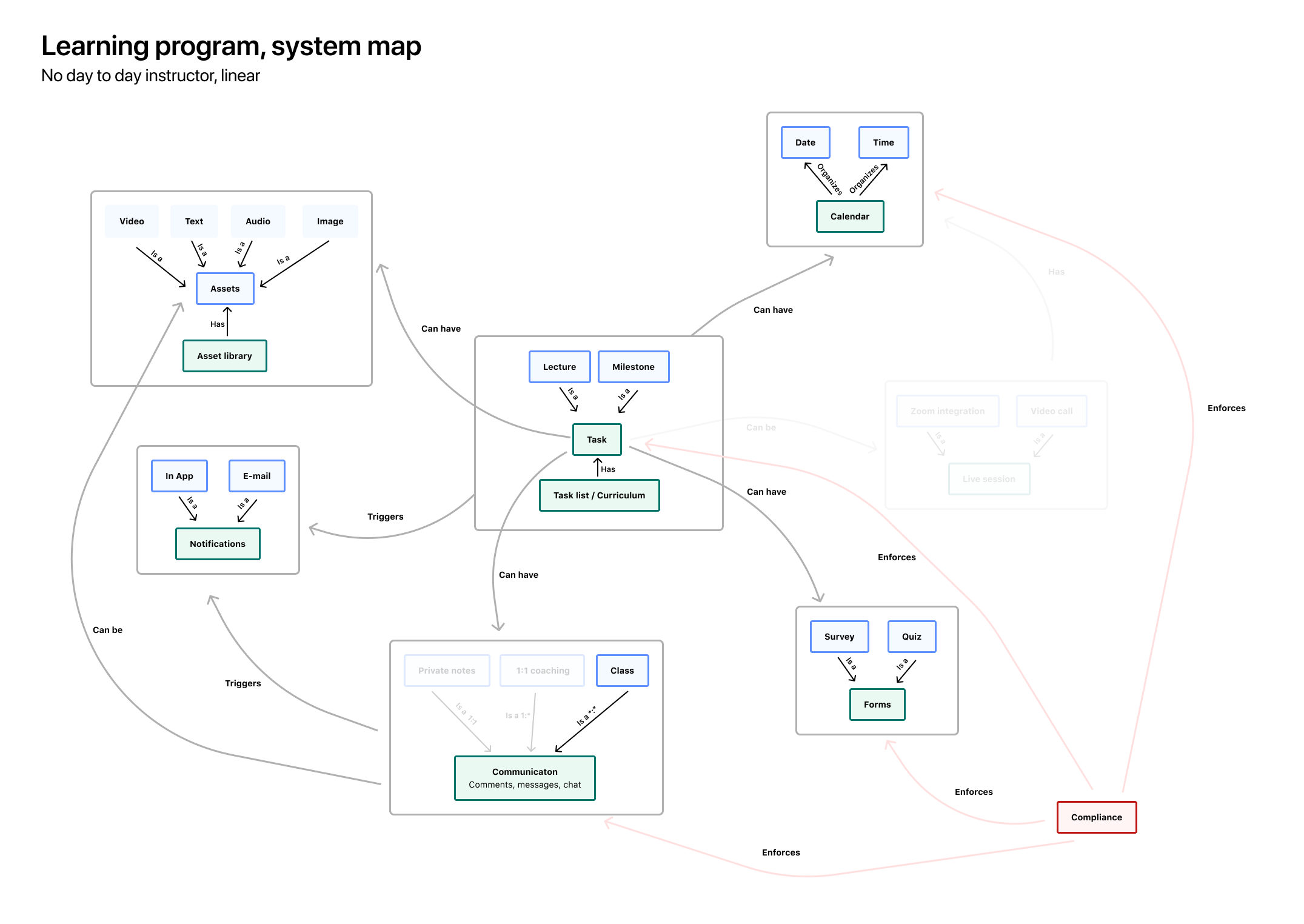
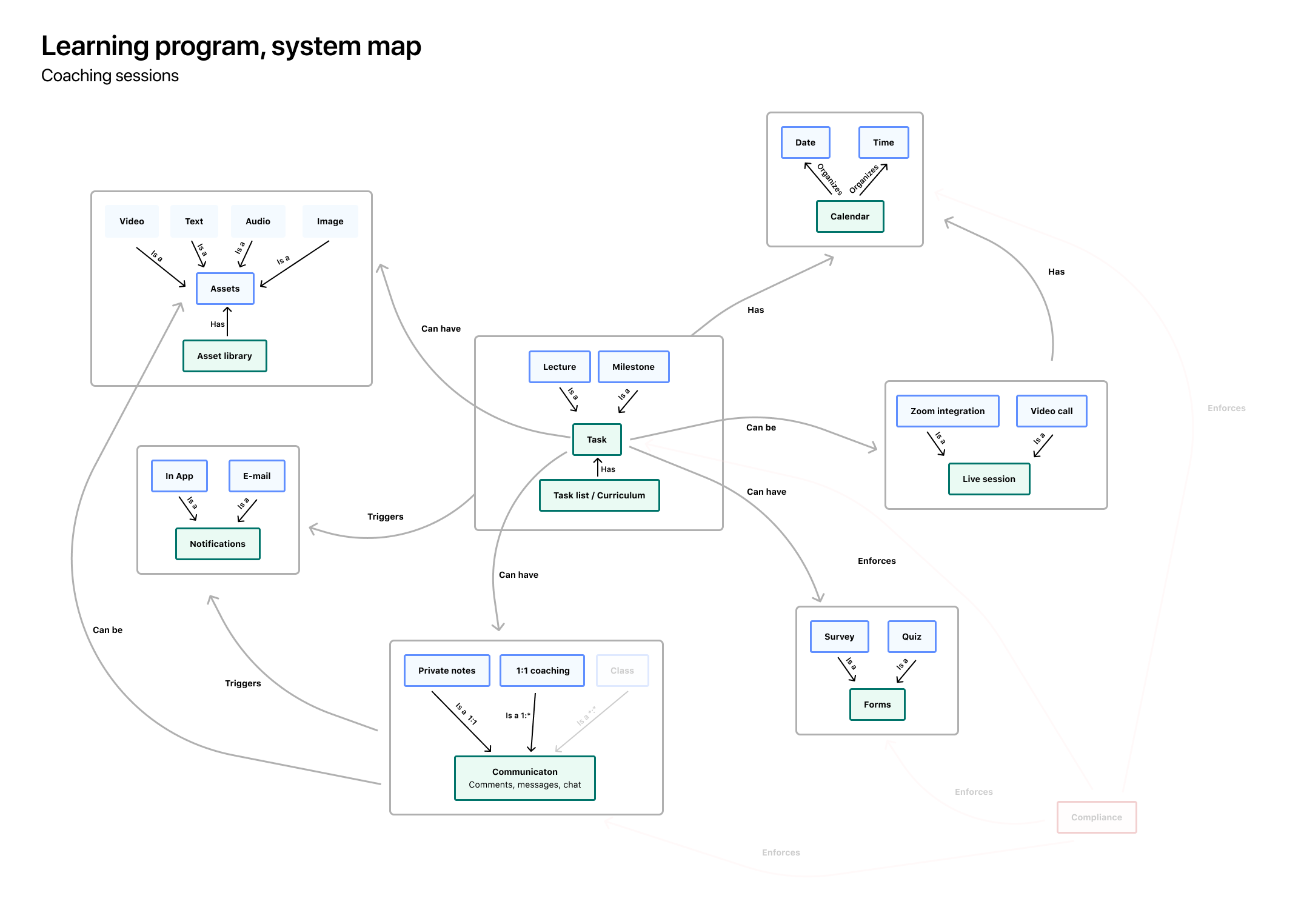
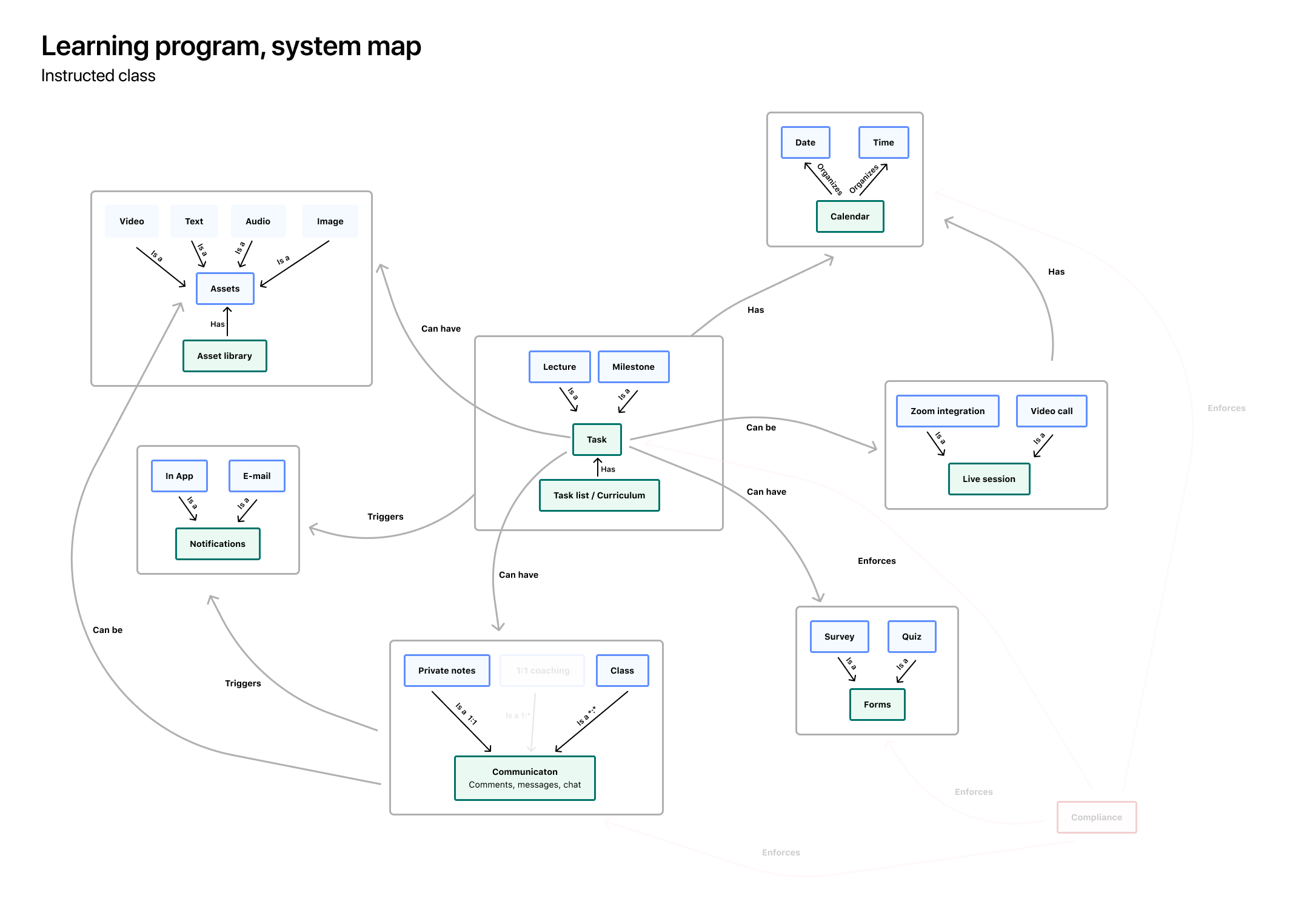
We developed a mental model, referred to as the "kitchen sink map," to understand how different learning capabilities integrate into the overall ecosystem. By analyzing how creators structure their courses, we identified several course types, ranging from self-paced, non-linear models to more structured, instructor-led formats.
Types of Learning Models:
No day to day instructor, non linear - Typical of many online courses, with no instructor-student interaction..
Instructed, asynchronous - Self-paced, but with some interaction through comments and notifications.
No day to day instructor, linear - Similar to the asynchronous model but with added compliance settings.
Instructed class - Cohort-based courses with live instruction, events, and flexible communication, all managed without compliance enforcement. It’s the Teacher’s role to guide learning without the need for compliance.
1:1 Coaching sessions - Individual coaching, structured like instructor-led classes but personalized for one-on-one interaction.
Validating the Model: User Research
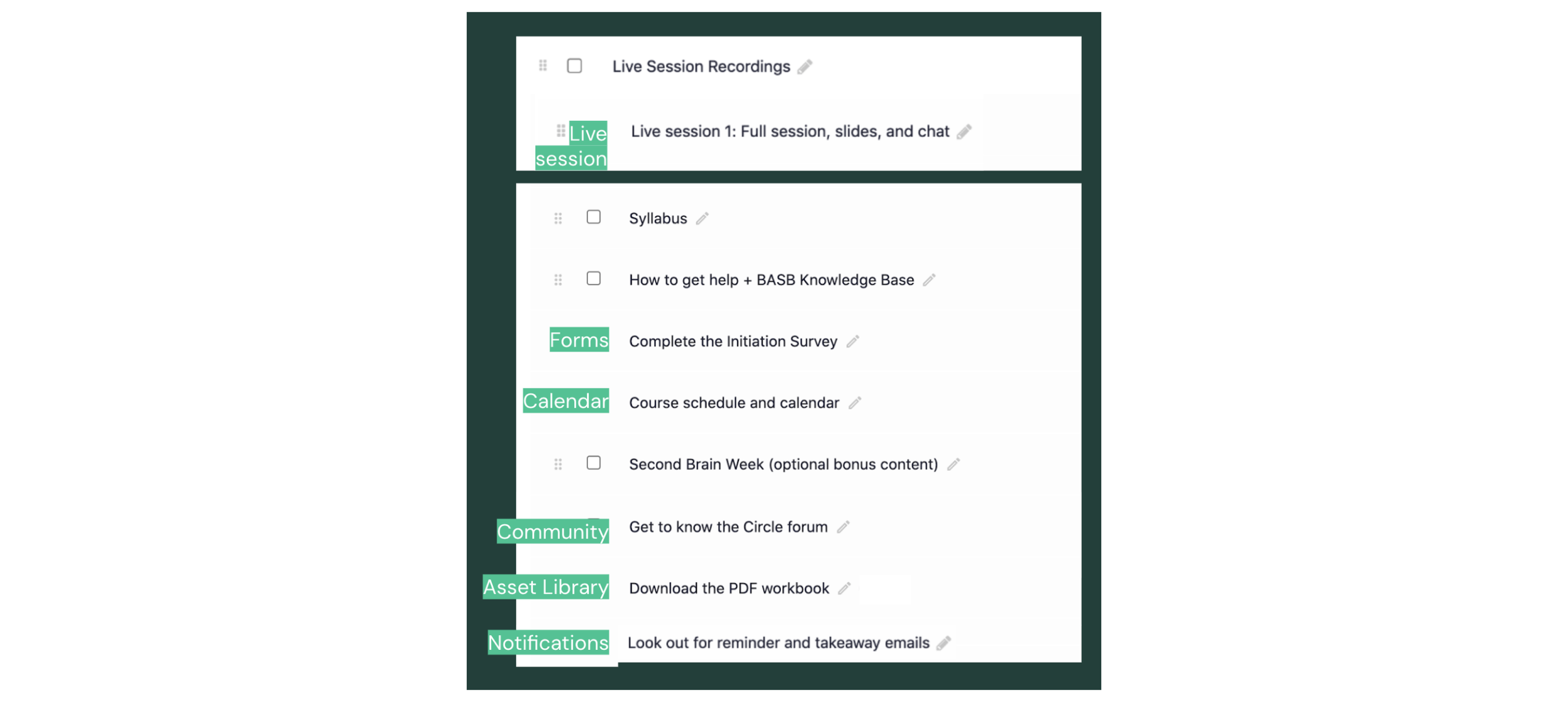
To validate this idea effectively, we took a closer look at some of our top customers. We thoroughly examined their offering by investigating various aspects, including their sales pages, their diverse products, and the specific contents of those products. From this comprehensive analysis, we learned that our users tended to provide similar experiences, such as live sessions, surveys, schedules of meetings, and other interactive elements. However, they utilized different tools and platforms to implement these features, ultimately bringing all of that together in a cohesive course curriculum within Teachable.
Gaining Deeper Insights Through Interviews
From here, we decided to conduct some user research with the goal of understanding:
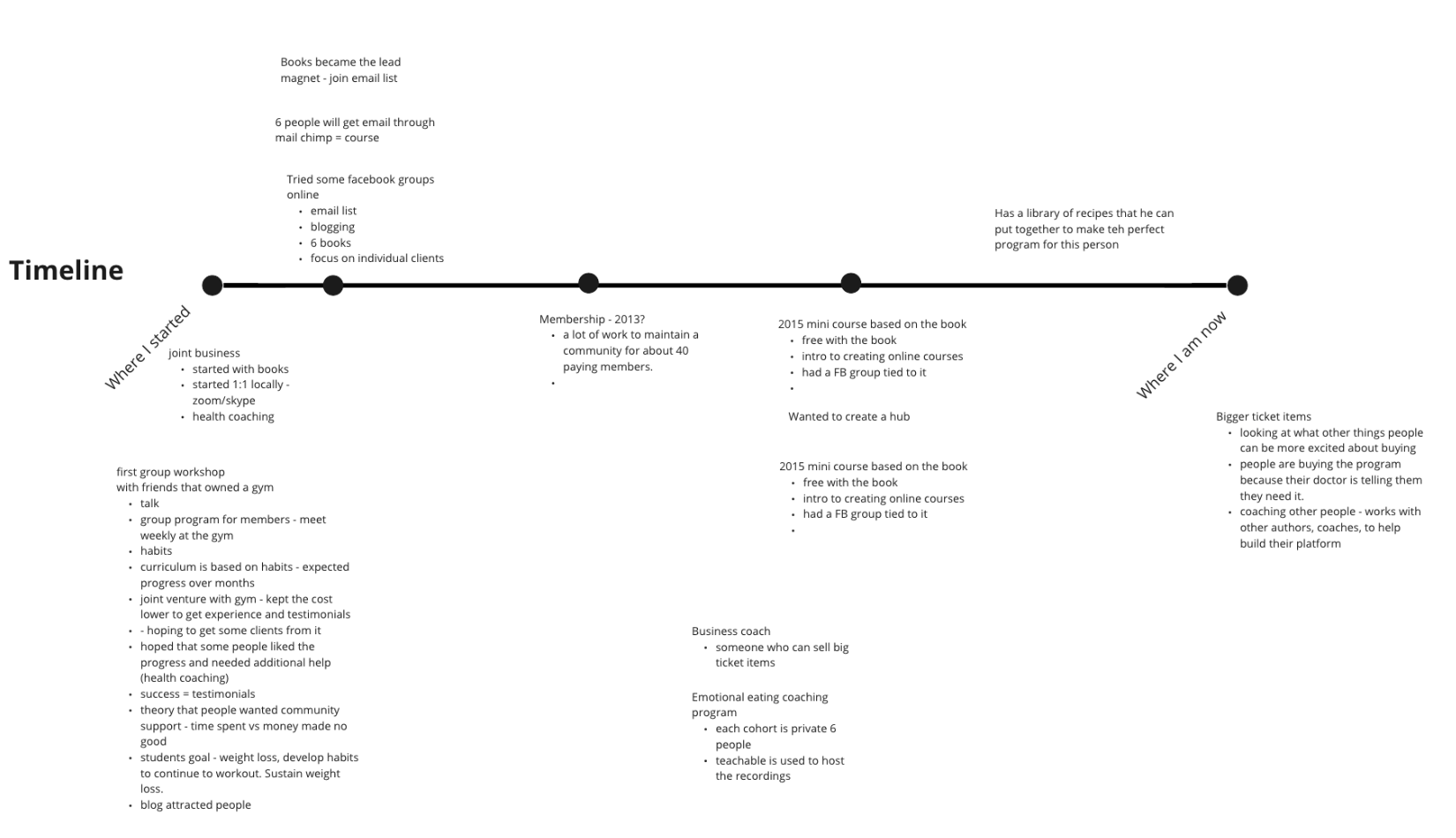
How user’s teaching styles evolved over time (teaching journey)
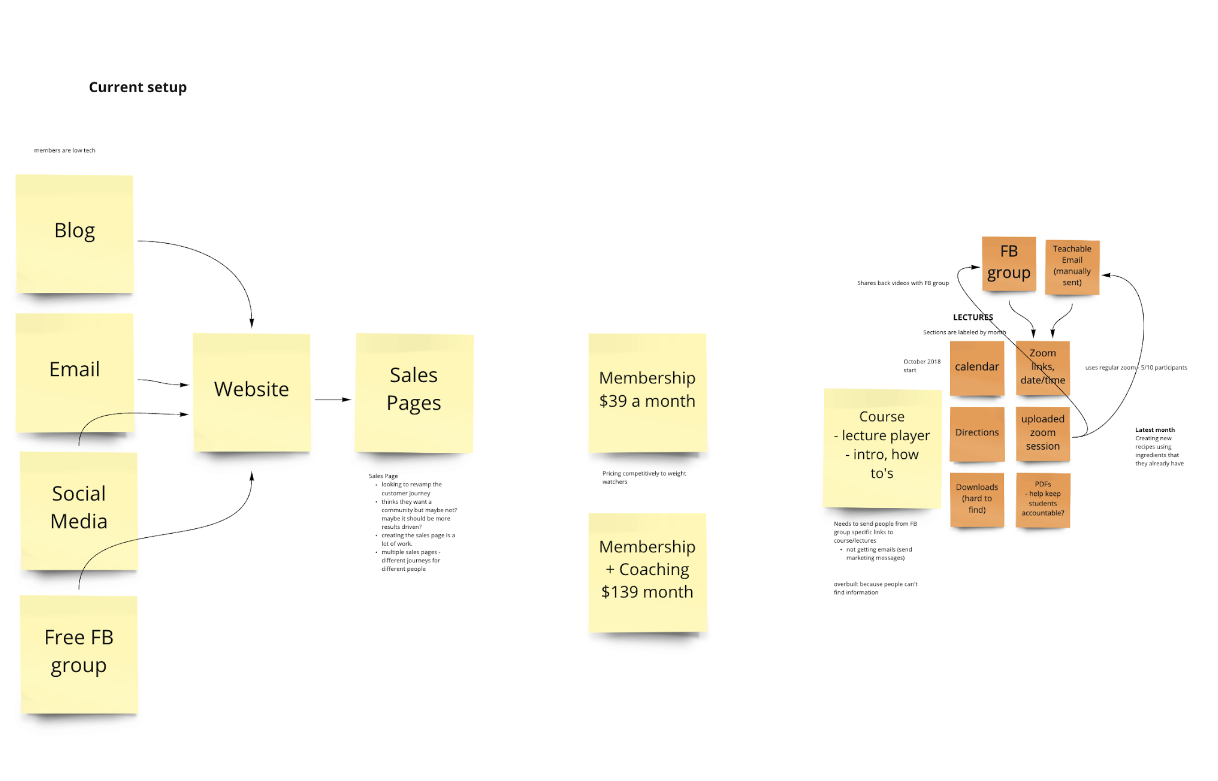
What user’s current teaching model is (on Teachable)
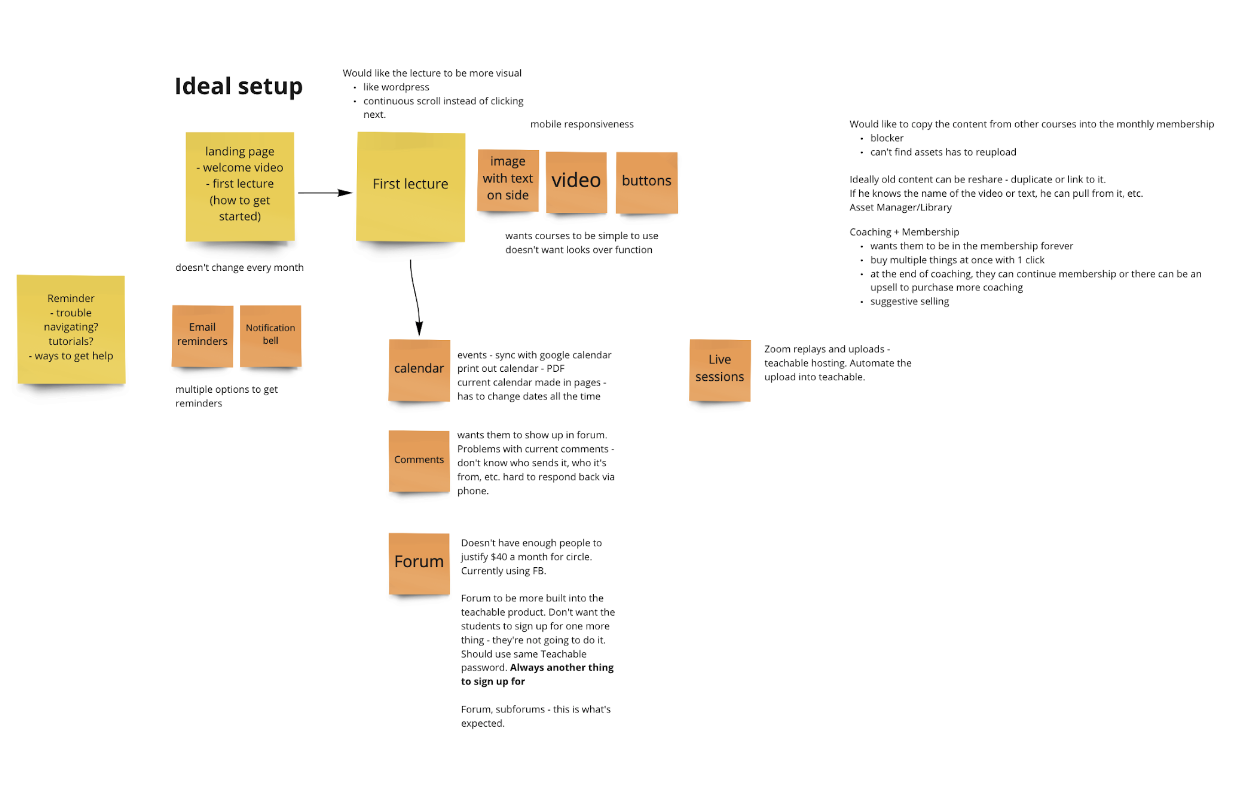
What their ideal setup is, given carte blanche (mental model)
The Research
We spoke to a cohort of 6 current Teachable users who we identified as conducting learning programs within their existing courses across different disciplines.
The participants were recruited from a list of ~240 participants that was generated by cross-referencing Schools with a non-zero sales and leveraged feature usage that were indicative of learning programs.
The response from participants was lower than expected, so we enhanced our recruitment efforts by using a more detailed screener within the Teachable community.
We spot-checked the schools of the participants we deemed adequate and scheduled interviews.
The interviews
The interviews ran 1 ½ hours, and consisted of 3 exercises. Insights were captured in real time on a miro board in 3 sections. After each section, the participant looked over the board for accuracy.
Timeline - Business journey mapping, from their first spark with teaching through their current business, with a focus on teaching modes and attitudinal changes in their business.
Current setup - Talked about their current setup, both off and on Teachable, but with a focus on how they set up their courses. At this point we asked them to share their screen for context.
Ideal setup - Talked about their ideal setup.
Key Takeaways from Creators:
Creators want “everything in one place”
Specifically, creators want a place to house content, have discussions, and schedule live sessions.
There was concern regarding the numerous third-party tools and their costs, which were seen as essential to their learning pathway.
“Right now everything’s just kind of CRM tools, then Convert Kit. Squarespace,
Zapier and Teachable, Facebook and everything [else].”
Interpersonal communication tools are table stakes
Without communication tools, affording these creators’ learning styles would be impossible. They currently use a diverse set of platforms to accomplish this now.
“I want to create a community of people who are like, ‘We’re showing up and we’re doing this work together’… And I also want to create like a connection with them. That’s like...this is a place that they hang out…these are people that they want to be talking with.”
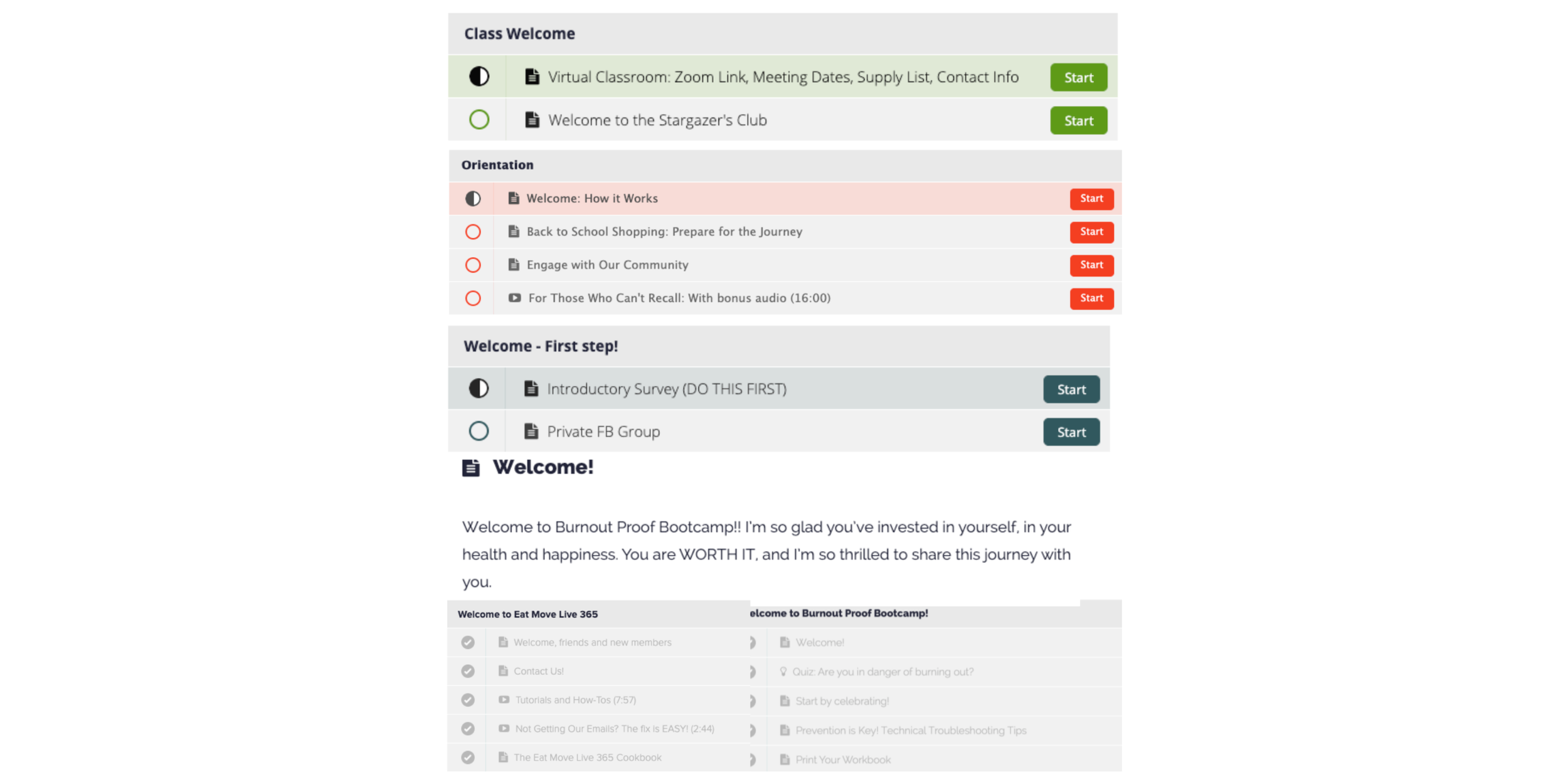
A welcome message is important
All of the creators we talked to described some sort of welcome portal as important for setting the tone for their course. They accomplish this now using a section with welcome and tutorial information.
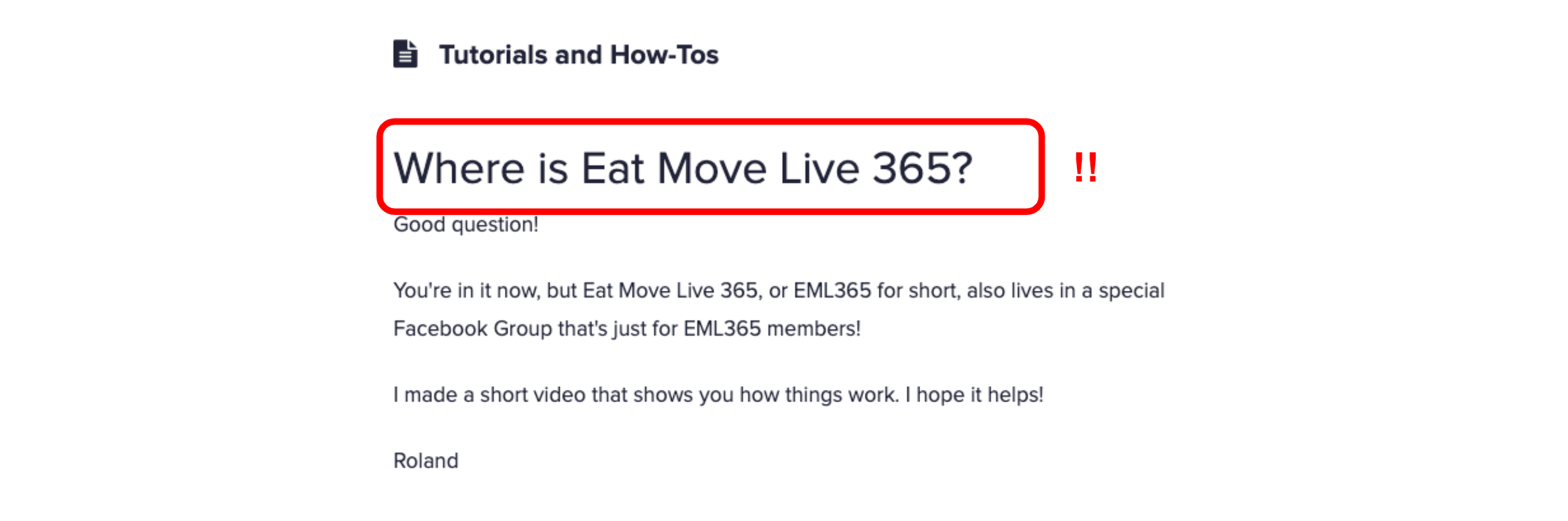
Student navigation needs to be as simple as possible
Creators don’t want their students to have to fight the tool, and they don’t want to have to act as support.
“Giving them tools that..keep it super simple is going to help them succeed.”
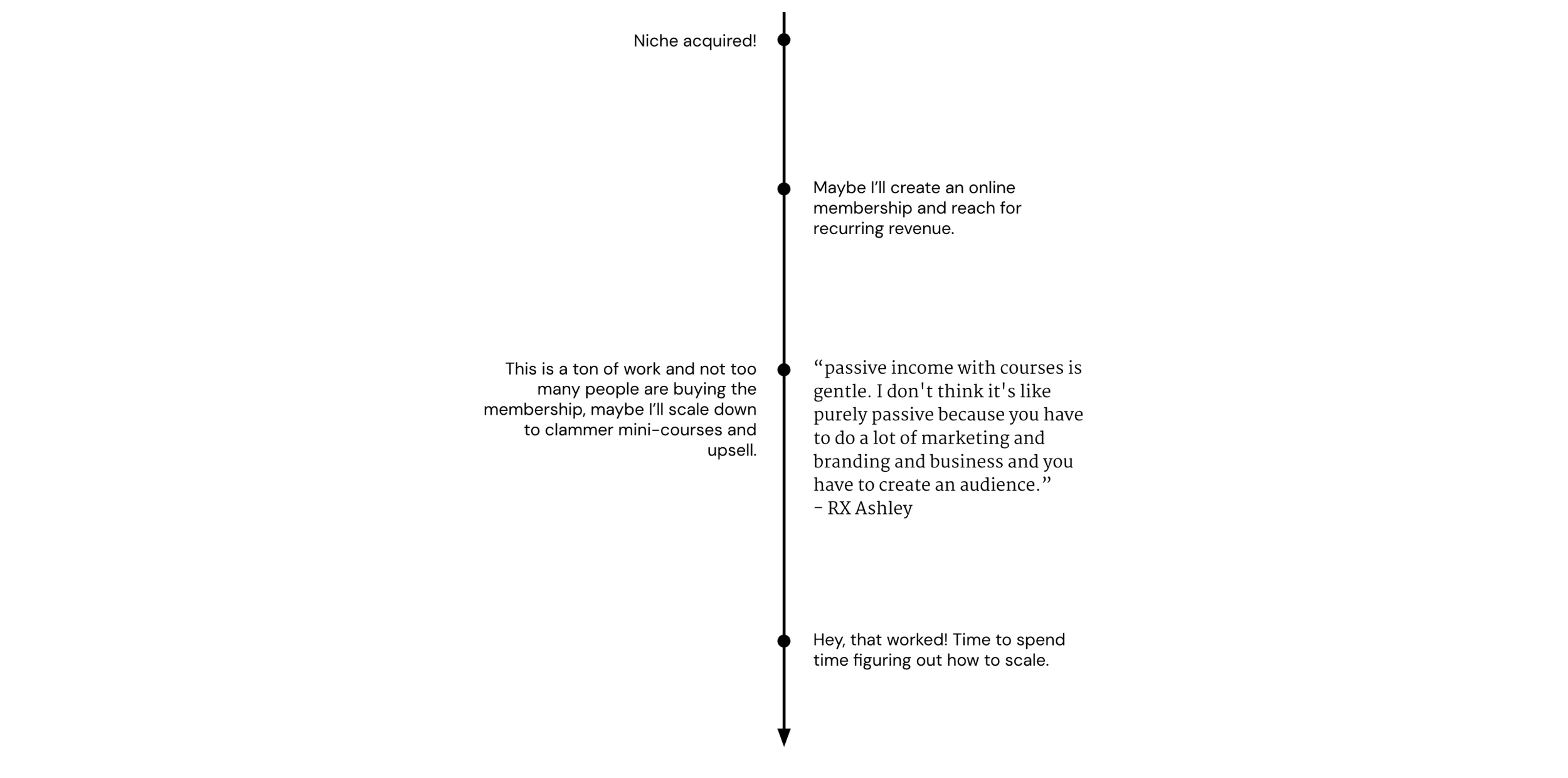
They started with an aspirational membership, and iterated
They had grand plans for the recurring revenue they would accrue. However, they realized that either the audience wasn’t there, or the price point was too high. So. they experimented with reusing content in smaller pieces and upselling.
“So we made this membership 2 years ago...what else can we do to where the membership can be like a sort of a supplement?
Now we have this huge library of resources...that we can put together and make...a perfect program for this person.”
Their business journeys are consistent.
The creators we talked to have eerily similar business journeys, which punctuate both their day-to-day difficulties and their need for specific features, like modular content and asset management.
Desired outcomes FOR IMPROVEMENT
Based on the learnings from user research, desired outcomes were formulated along with some considerations for those outcomes.
(1)
It’s easy for individuals in the program to communicate with each other
Refactoring comments
1st party communication tools
Chat
Forum
Community integrations
Replatforming notifications
Seamlessly integrated live sessions
(2)
It’s easy for creators to experiment with their own content
Reusable assets
Flows optimized for reusing existing content
Cut, copy, templating, etc.
Modular functionality
(3)
It’s easy for students to engage with the program
Productize a simple IA/Navigation on the student side
1st party scheduling + calendar integration
Productize a welcome or orientation message
Prioritize memberships
Prioritize a 1st party feeling on the student side
One login for access to everything
Impact
The insights gained from our deep dive into user needs and teaching models have played a crucial role in shaping the future of Teachable's platform. By understanding creators' evolving preferences for streamlined content management, communication tools, and flexible learning models, we've been able to prioritize and deliver many key improvements. Over the past few years, several desired outcomes have successfully made their way into the product roadmap and have been shipped, including a redesigned comment feature, a new community platform, Zoom integration for live sessions, Calendly integration, a new membership product, and tools for content reuse and import.
Looking ahead, the upcoming features—including a refreshed student experience, a new student hub, modular product creation, and cohort management—highlight the value of our user research in shaping the platform’s evolution. The insights we gathered directly from creators have been instrumental in driving these updates, ensuring that the features we develop truly address their needs and enhance their teaching processes.